Burst Pipe Water Damage in Boston, MA
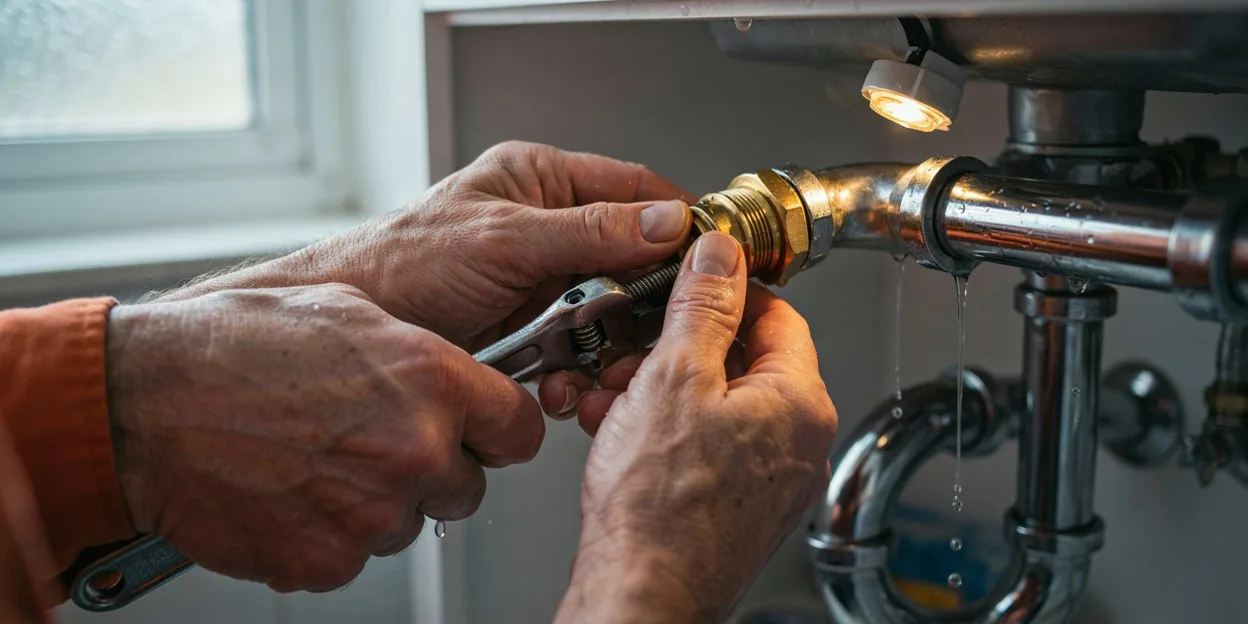
You heard it before you saw it: a hiss behind the kitchen wall, then water spreading across the floor faster than the towels could keep up. By the time you found the main valve in the cellar, the downstairs neighbor was at your door. Call us now and tell us what you see. An independent local provider who handles burst pipe water damage in Boston and the inner-ring cities takes it from there.
What the crew does first
The crew confirms the water is off, then follows the path. A supply line under pressure can push several gallons a minute, and in a Boston house that water does not stay on one floor. It runs down the wall cavity, across the ceiling below, and into the basement. The crew meters every level from the break to the cellar before deciding what opens.
Then extraction: weighted extractors on carpet, wet vacuums on hardwood, pumps in the basement if it pooled there. Wet insulation in the outside wall and soaked plaster around the break are cut back. Air movers and dehumidifiers go in by the readings, and the crew checks the numbers daily. Fixing the pipe itself is a plumber's job, and the two often work the same day.
What to do in the next hour
Shut the water off at the main valve in the basement, usually on the front wall near the meter. In a multi-family building, that valve may serve everyone, so tell the other units. If water is near the panel or an outlet, turn off that circuit from a dry spot or leave it and say so on the call.
Move rugs and furniture off the wet floor. Put a bucket under any ceiling drip and stay out from under a sag. Photograph each room before anything is thrown away. Then call, and call a plumber. Say how long the water ran, because a line that broke while you were at work has done a different job than one you caught in five minutes.
What is usually saved and what is not
Framing, subfloor, and sound plaster on lath usually dry in place when the water is clean and the crew gets to it within a few days. Oak floors caught early can often be dried with mats. Solid wood furniture and cabinets that only got splashed are cleaned and dried.
The wet outside wall, the soaked insulation, and any plaster that has gone soft come out. Carpet pad, particleboard, and cardboard on the wet path go. Ask what reading led to each removal and photograph everything first. If the pipe froze before it broke, the timeline runs longer, and frozen pipe cleanup is the closer fit. Once the standing water is gone, structural drying finishes the work.
Suffolk County notes: a century of pipe
Much of the plumbing in Boston, Somerville, and Quincy went in between 1890 and 1930 and has been patched in pieces ever since. Galvanized steel supply lines corrode from the inside until a thread lets go. Old copper pinholes where it touches masonry. Cast-iron drain stacks crack at the joints. Steam and hot-water heating adds radiator supply and return lines that run through every floor, and a failed valve or a split return can dump the whole system.
The stacked house is the Boston complication. A triple-decker in Dorchester or a two-family in Medford puts three kitchens and three bathrooms over one basement, and a break on the top floor is a ceiling loss on the second and a puddle on the first. Say how many units are wet when you call. If the water reached a plaster ceiling below, ceiling water damage repair is part of the scope. A rowhouse in the South End or Charlestown shares party walls, and water can cross into the neighbor's cavity.
Many homeowner policies treat a burst pipe as a sudden loss and cover the resulting damage. The pipe repair itself is often not covered, and a slow leak that was ignored is a different story. Ask the crew to photograph the break and record the first readings so your adjuster has a starting point.
Calling about burst pipe water damage
Say where the break is, whether the water is off, how long it ran, and which floors got wet. Mention other units, a wet ceiling below, hardwood floors, and whether a plumber is already on the way. Call (857) 524-9927 now and tell us what you see.